The One-Eyed Man Was Wrong
H.G. Wells wrote a story in 1904 about a one-eyed man who stumbles into a valley where everyone has been without sight for generations. He assumes the old proverb will hold: in the country of the blind, the one-eyed man is king.
He was proved wrong. The villagers have built a coherent civilization of their own. When he insists he can "see," they do not treat him as enlightened. They treat him as unintelligible.
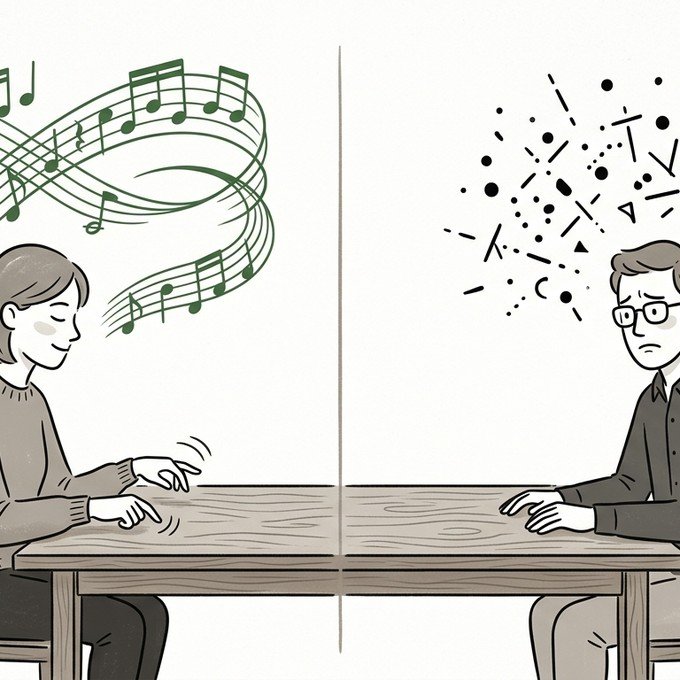
I kept thinking about that story after encountering a conversation about the Curse of Knowledge and AI adoption. Elizabeth Newton's 1990 music "tapper" and "listeners" study made the dynamic visible: tappers predicted listeners would recognize the song about half the time. The actual rate was just 2.5%. That is a useful lens for AI champions inside organizations. They hear the melody. Everyone else hears knocking.
This Is Not a Communication Problem. It Is a Relevance Problem.
Wells adds the harder truth. This is not only a communication problem. It is a relevance problem.
Every firm already has its own valley: workflows, language, incentives, and a shared logic that makes sense from the inside. When an AI champion walks in saying, "I can see a better way," colleagues do not always hear possibility. Sometimes they hear, "I think your world is broken."
I recognized myself in that. I have shown colleagues AI workflows that cut hours out of a deliverable, fully expecting the value to be self-evident. They nodded, said "that is interesting," and changed nothing. I was explaining from my map, not theirs. And I wonder whether I am the tapper, the one-eyed man, or both.
Trust Calibration: Leading with Their Vocabulary
So I am rethinking the approach. Not describing what I can see. Learning the paths the village already walks, then finding where sight makes those paths safer or faster. Not replacing the civilization. Extending it.
That is the real trust calibration: knowing when to lead with your vision and when to lead with their vocabulary. In AEC, where only 27% of firms currently use AI, adoption is not built through evangelism. It is built through workflow fit, process design, and trust.
The one-eyed man in Wells's story chose to flee rather than lose his eyes. The AI champion's job is harder. Stay in the valley. Earn trust. And never forget that the village was there long before you arrived.
Am I Still the Tapper?
I wrote this edition because I recognized the pattern in my own behavior. I have been leading with conviction about what AI can do for AEC firms. But conviction without calibration is noise.
The ½: I am still figuring out how to tell the difference between moments where I should push harder and moments where I should listen longer. The temptation is always to show more. The discipline is to meet people where they are. I am not there yet.